Introduction
Power is what separates basic camping from true overlanding.
If you only run a flashlight and a phone charger, you can get away with minimal gear.
But once you add:
-
A 12V fridge
-
Starlink or WiFi
-
LED camp lighting
-
Diesel heater
-
Camera equipment
-
Laptop
-
Air compressor
You need a real electrical system.
And here’s where most people fail:
They either:
-
Overspend on the wrong setup
-
Buy underpowered systems
-
Or build unsafe wiring configurations
This guide will show you exactly how to design the right off-grid power system — whether you're building a weekend rig or a full expedition vehicle.
1. Understanding Overland Power Basics
Before buying anything, understand this:
Electric systems are not about watts.
They are about energy storage and energy flow.
There are three pillars of overland power:
-
Energy Storage (Battery)
-
Energy Input (Charging)
-
Energy Output (Appliances & Inverter)
If one of these fails — your entire system fails.
2. How Much Power Do You Actually Need?
Let’s break this down realistically.
Example Daily Consumption
| Device | Avg Usage | Daily Wh |
|---|---|---|
| 12V Fridge | 24h cycling | 400–600 Wh |
| LED Lights | 4h | 40 Wh |
| Laptop | 3h | 150 Wh |
| Phone charging | — | 20 Wh |
| Starlink | 5h | 250 Wh |
Total: 860–1,060 Wh per day
That means:
You need at least a 1,000Wh system — and ideally more for buffer.
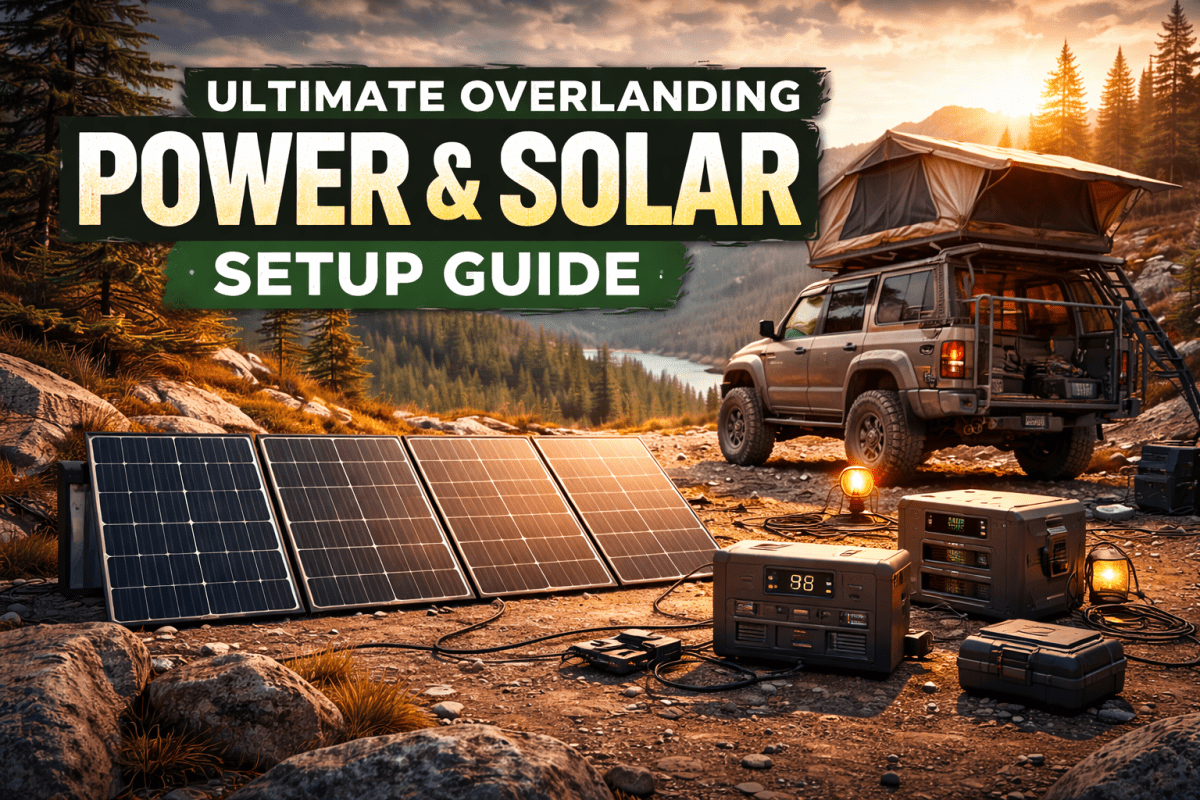
3. Portable Power Stations (Plug & Play Option)
Best for:
-
Beginners
-
Simplicity
-
Removable setups
Pros
-
No wiring skills required
-
Built-in inverter
-
Built-in charge controller
-
Safe & portable
Cons
-
More expensive per Wh
-
Harder to upgrade
-
Limited expandability
Ideal capacity range:
1,000–2,000Wh
If you're doing weekend or light multi-day trips, this is often enough.
4. Dual Battery Systems (Permanent Install)
Best for:
-
Frequent trips
-
Fridge users
-
Long remote stays
Basic Components
-
100Ah+ lithium battery
-
DC-DC charger
-
Fuse block
-
Inverter (optional)
-
Solar charge controller
Why Lithium Wins
AGM batteries are outdated for overlanding.
Lithium advantages:
-
80–90% usable capacity
-
Lightweight
-
Faster charging
-
Longer lifespan (2,000–5,000 cycles)
Example:
100Ah Lithium = ~1,200Wh usable
100Ah AGM = ~600Wh usable
Same size. Half the real power.
5. Solar Panels: Do You Really Need Them?
Short answer:
Yes — if you stay parked longer than 2 days.
Solar Options
-
Portable foldable panels
-
Permanent roof-mounted panels
-
Hybrid (best option)
How Much Solar?
For a 100Ah lithium system:
Minimum: 100W
Recommended: 200W
Solar does not fully replace driving — but it massively extends autonomy.
6. Inverters: When Are They Necessary?
You only need an inverter if you run:
-
110V appliances
-
Camera chargers
-
Laptop chargers without 12V adapter
-
Power tools
Typical inverter sizes:
-
300W → light usage
-
1,000W → most overland rigs
-
2,000W+ → heavy builds
Important:
Pure sine wave only.
Never cheap modified sine wave.
7. The 3 Most Common Power System Mistakes
1. Undersizing The Battery
If your fridge uses 500Wh daily and you buy a 500Wh battery, you will fail.
Always double your daily consumption.
2. Ignoring Heat
Lithium batteries hate extreme heat.
Install:
-
Ventilation
-
Insulation
-
Avoid engine bay mounting
3. Forgetting Fuse Protection
Every positive cable must be fused near the battery.
Electrical fires destroy vehicles faster than trail damage.
8. Budget Breakdown
Budget Setup ($800–$1,500)
-
1,000Wh power station
-
100W solar panel
-
Extension cable
Good for weekend trips.
Mid-Range Setup ($2,000–$4,000)
-
100Ah lithium battery
-
DC-DC charger
-
200W solar
-
Fuse block
-
1,000W inverter
Best balance of cost & autonomy.
Premium Expedition Setup ($5,000–$12,000+)
-
200–400Ah lithium bank
-
400W solar roof
-
DC-DC charging
-
Shore power charging
-
Smart monitoring system
-
2,000W inverter
Designed for full-time travel.
9. Realistic Autonomy Example
100Ah lithium + 200W solar:
-
Fridge running 24/7
-
Lights
-
Laptop
-
Phone
-
Starlink part-time
Autonomy:
3–5 days without driving
Unlimited with good sun
10. Power Strategy for Different Travel Styles
Weekend Warrior
Portable power station
No permanent install
Monthly Explorer
100Ah lithium + 200W solar
Full-Time Overlander
200–300Ah lithium
Roof solar
DC-DC + inverter
Monitoring system
11. Is Overbuilding Worth It?
Many people buy:
-
400Ah banks
-
Massive inverters
-
Overkill systems
Then use 30% of it.
Power systems should match use case.
Weight matters.
Budget matters.
Simplicity matters.
12. The Smart Upgrade Path
Phase 1:
Portable power station.
Phase 2:
Add 12V fridge.
Phase 3:
Switch to lithium dual battery.
Phase 4:
Add solar roof mount.
Phase 5:
Upgrade inverter & monitoring.
Never build everything at once.
13. Final Thoughts
Your overlanding power system is not about showing off.
It’s about:
Reliability
Safety
Sustainability
Independence
Start simple.
Measure consumption.
Upgrade based on experience.
The best power system is the one that supports your travel style — without complexity you don’t need.